
Lessons that Lake County can Learn from World Cup Countries
By: Andy Davis
Using International Practices to Boost Mobility
As the World Cup nears its final stages, the United States, our cities, and our cities’ public transportation networks (or lack thereof) have been a hot topic in international discourse. Some might say that they were pleasantly shocked about the ease of access of some stadiums (Atlanta Stadium, Seattle Stadium, and Bay Area Stadium, to name a few). While some stadiums left international fans flabbergasted at the lack of transit and development around such a massive stadium (Think Kansas City Stadium, Houston Stadium, and Dallas Stadium).
It hasn’t been just one country’s fans calling the USA’s lack of transit and development out, either. From Japan to Britain, fans traveled here without wanting to use an automobile, and many were left disappointed. Rideshare prices skyrocketed in cities with little-to-no transit due to the large demand. Even when there was transit accessible, some transit authorities (Boston’s MBTA and NJ Transit, specifically) price-gouged fans into making them pay highly-priced train tickets, instead of improving service frequencies or capacities.
Nonetheless, the 2026 FIFA World Cup has put the United States lack of transit infrastructure on blast. The only way to go for US transit is forward. So, what lessons can our humble US county of 230,000+ people learn from international transit developments, and apply them to our way of life?
Implementing Dutch Micromobility
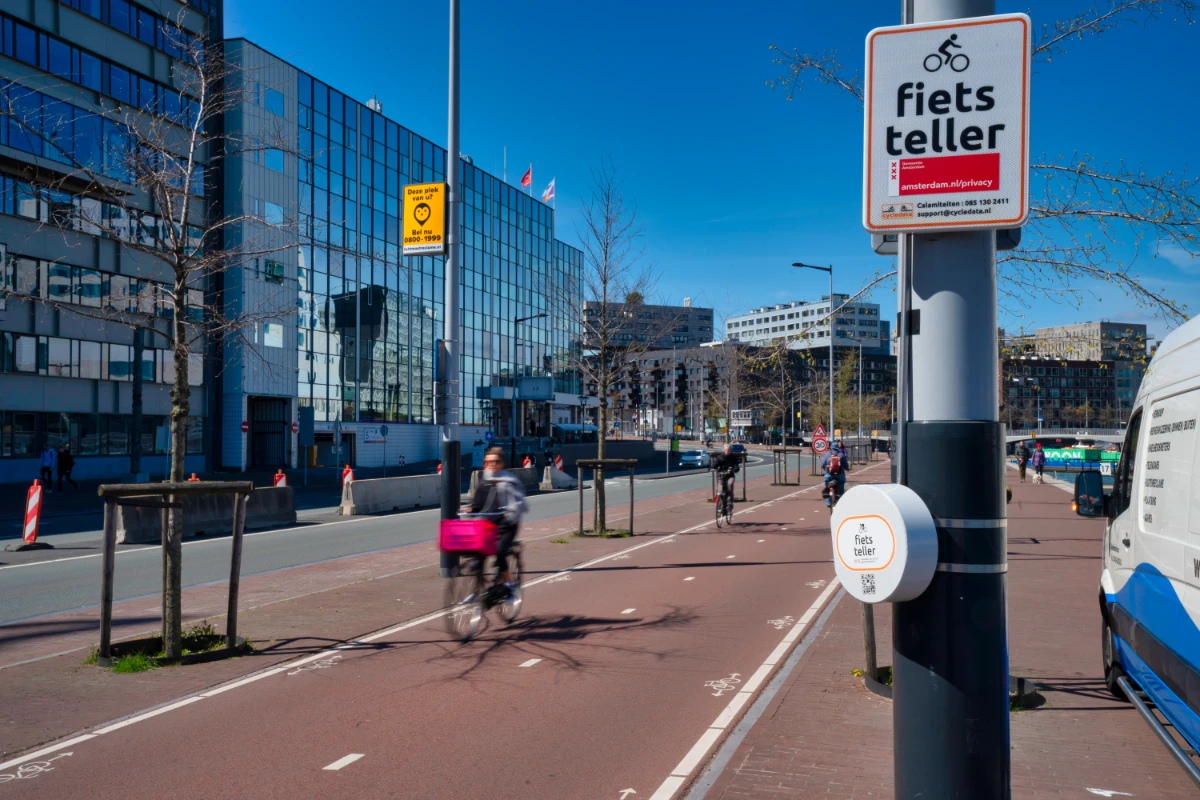
The Netherlands, specifically the capital of Amsterdam, is universally known as one of the most bike-friendly countries in the world. According to a 2023 study, around 28% of all trips in the country are taken by bicycle. In order to ensure safety, the city of Amsterdam has over 476 miles (767 km) of protected bike lanes that prioritize cyclists and pedestrians over cars. This leads to the Netherlands being ranked 13th in the Global Sustainability Index, with the country, and the rest of the EU, hoping to maintain carbon neutrality by 2050.
Lake County, on the contrary, does have 62 miles of bike paths and lanes. However, they are not protected by any sort of barriers or curbs. For bike lanes, paint is not protection. This leaves the abilities for distracted/speeding drivers to drift into bike lanes, which puts bikers an substantial risk. On top of that, the bike lanes/paths typically do not connect to any dense developments/businesses/points of interest that make it easy to navigate without using an automobile.
Good bike infrastructure allows users to traverse from Point A to Point B using only a bike, and for that trip to be safe and useful. It should not require a potential user to pack their bike into an automobile and find a parking lot adjacent to the trail/lane. Bike infrastructure should be a network, and we believe that Lake County is the perfect place to connect our natural beauty with out cities to create more sustainable transit environment.

France (Paris’) Dense Development
Large, dense, and mixed-use infrastructure is synonymous with the city of Paris, France. The city is lined with glorious art deco and art norveau style buildings that house small businesses, gathering spaces, hotels, residents, and many more developments that shape the character of the city. There’s hardly any gaps in a Paris streetscape that’s dedicated to surface parking lots. The city plan is clear and concise: Let the Eiffel Tower stand tall, but keep people close. The city plan is subsidized by one of the most fascinatingly useful and thorough transit networks in the world, which allows for many Parisians to live car-free.
For many Americans, especially Lake County citizens, the only walking that is done on a daily basis is the walk to/from their car, to/from their home and work building. This lack of walkability and dense infrastructure is a part of the reason why the USA has an obesity rate of 41%, which ranks 10th in the world.
The opportunity to choose to walk or bike, as compared to driving a car, promotes a healthy lifestyle that many Americans lack. If our government really cared about the “Make America Healthy Again“ program, they would focus on promoting parks, walkability, transit, and density over promoting raw milk and steroid usage.
Germany’s Regional Rail
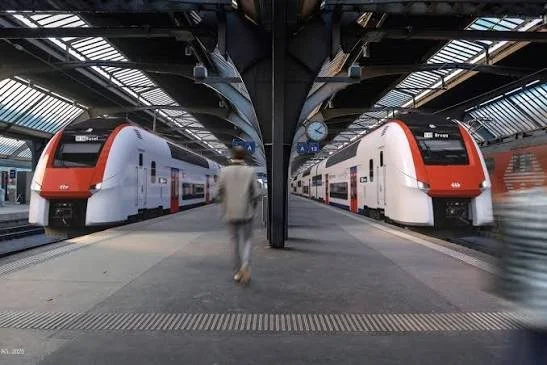
German cities, such as Munich and Berlin, have innovated the regional railway system by creating the “S-Bahn”, which is a blend of a typical metro system and a typical regional system. It uses the frequencies of a metro system (up to 10-minute headways) and blends it with the sparse traverse of regional rail. The only difference is that stops tend to be more spread out, which benefits the areas who are dense enough (literally, not figuratively) to acquire an S-Bahn stop.
Lake County’s current geography aligns much of its population near the current Lake Erie District rail line, which is the line that much of our Regional Rail Proposal would theoretically run on. Lake County could follow the S-Bahn’s innovations by, for example, only including one station in Mentor, and increasing frequencies to something like 20-30 minutes during peak hours, and 45 minutes during off peak. This allows for less wait times, better connectivity with buses, and, as a result, better ridership.
Britain’s Intercity Rail
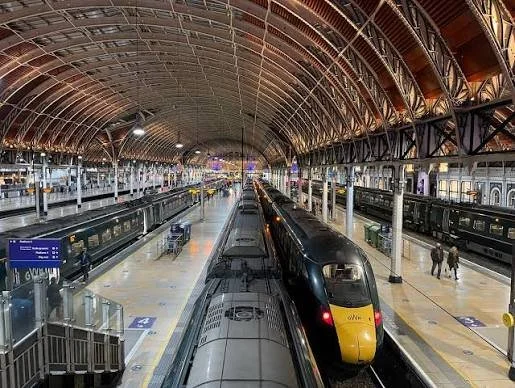
Great Britain’s national railway system owns and operates over 9,800 route miles of track, compared to Amtrak’s 620 miles of owned and operated track. The government owning these tracks allows for signal priority to go to the intercity passenger trains and NOT the long, extensive, and slow freight rail trains, as they do in the US. signal priority allows for faster speeds, higher frequencies, and better connectivity between population centers; something that >90% of Americans do not have access to. On top of that, stations are grand with modern amenities, and are in useful locations that connect to what the municipality has to offer.
Although this lesson is not truly specific to Lake County, Amtrak and the City of Cleveland could, and should, learn from what Great Britain has done. Currently, Cleveland’s only active intercity rail station is a small building that sits on a populated freight rail corridor, due to the fact that Cleveland doesn’t see a single intercity train during the daytime, at least it’s not supposed to. The station is only connected to the RTA’s Waterfront Line, which is only used during events at Huntington Bank Field. It’s a bleak sight to see, especially for a city with such a vast railroading history.
Terminal Tower, Cleveland’s second-tallest building, was once home to a booming passenger rail system that connected Cleveland to all different cities, and the infrastructure needed can be brought back to life. Cleveland, in theory, could connect to Chicago, Detroit, Columbus, Cincinnati, Pittsburgh, New York, Boston, and many more, all via the railroad, and yet we see FOUR trains per day.
International Lessons
With all this in mind, Cleveland could prime itself to host a few games of the U.S.’ next bid for a World Cup tournament, which could be as soon as 2038. The new Cleveland Browns Stadium will open by then, and our Airport modernization project could see substantial completion by then. With at leas 12 years to work with, and the 17th-Largest U.S. metropolitan area, our region could be poised to put the world on notice that the United States is catching up in infrastructure. Lake County could, and should be the catalyst for this in our region.
