Lake County for Public Transit’s Advocacy Goals and Potential Initiatives
Expanding Laketran Service (Short-Term Goal)
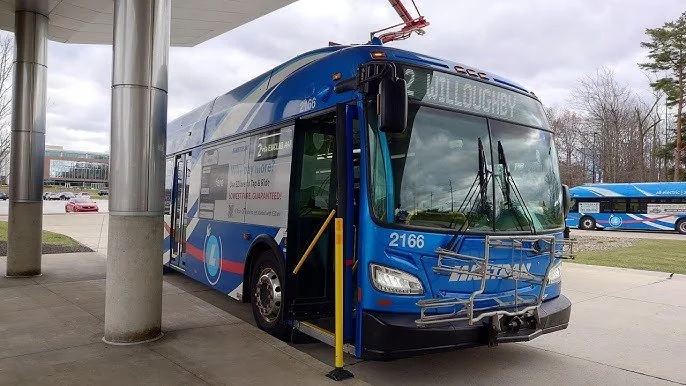
In Laketran’s current service configuration, the most popular local bus routes operate at 40-minute frequencies on weekdays and 1 hour frequencies on weekends. Park-and-ride buses operate at 30-minute frequencies, but only operate during unfavorable morning hours, or during the PM rush. These long headways and unfavorable operating hours mean that residents must rely on alternate forms of transportation, if their commutes do not fit perfectly within the confines of Laketran’s schedule and locations. At Lake County for Public Transportation, we are advocating for better public transit connections with Lake County and Downtown Cleveland/University Circle at all hours of the day, and at all days during the week. On top of that, we want Laketran to prioritize increasing frequencies along its’ most connective corridors, and increase the incentives for development on these corridors (see next paragraph). Lake County is home to many hard working citizens, such as those who work in Cleveland’s thriving healthcare industry or business district, and also plenty of citizens that work in many local industrial jobs. Regardless of the industry, establishing a better connection with all amenities and work locations downtown is mutually beneficial for the Greater Cleveland area, Lake County, the businesses, and the workers that make up our great area.
Boosting Transit-Oriented Development (Short-to-Long Term Goal)
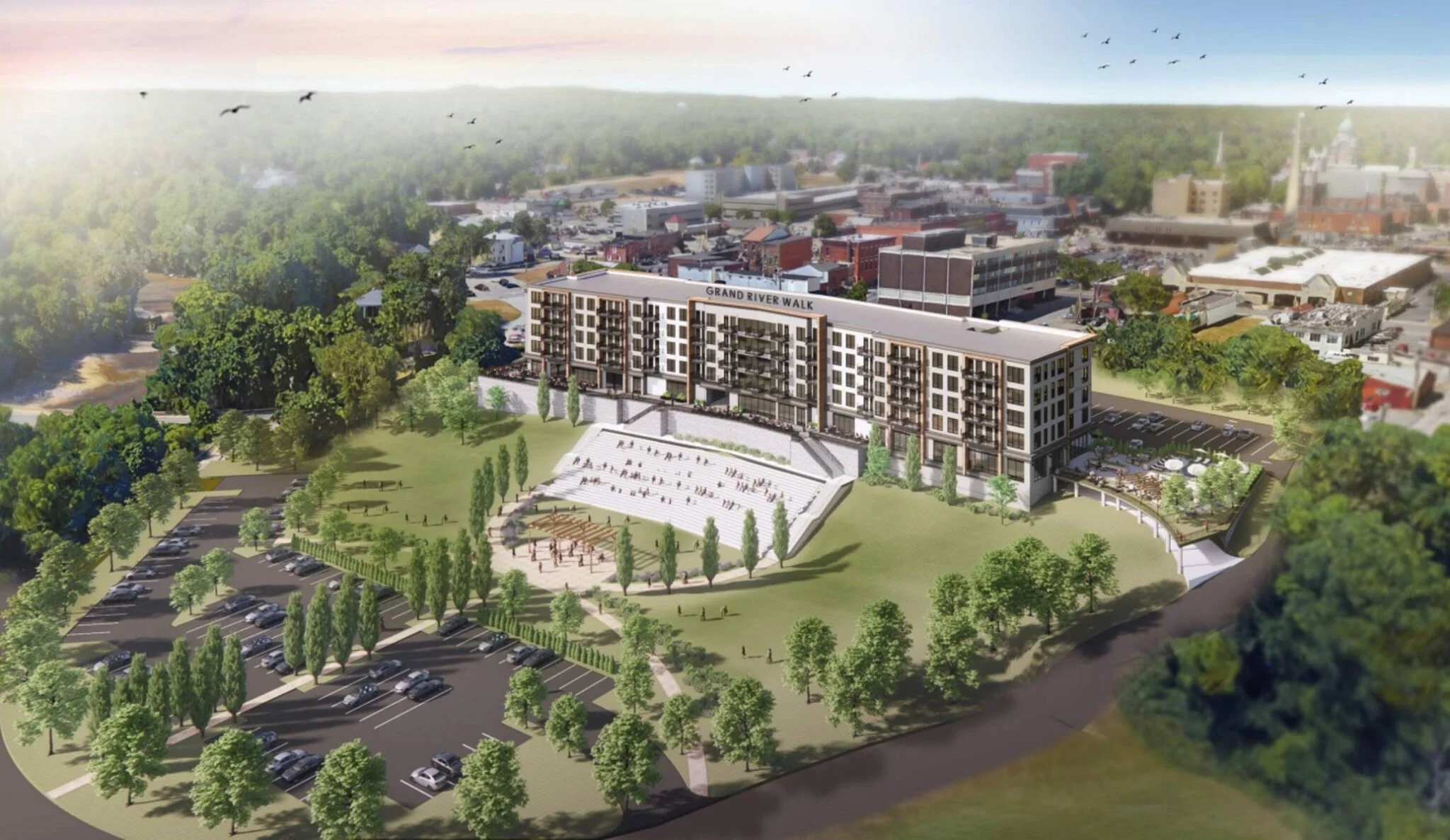
Northeast Ohio, specifically Lake County, is the perfect example of an area being subject to the suburban sprawl that was seen after WWII, in which people flocked to the suburbs and built their lives to revolve around the personal automobile. With this car-dependency, cities in Lake County were gutted of density, walkability, and the character of their downtowns. Despite this, cities such as Willoughby, Mentor, Painesville, and Madison kept (and even rebuilt) dense commercial/residential developments that sit adjacent to current freight rail lines and Lake County’s most popular transit lines, yet there has been little-to-no effort to boost the incentives for building more transit-oriented-development. Laketran has been searching for reasons to increase their bus route frequencies, in order to continue a positive growth pattern, and we believe that building affordable housing and affordable commercial space near popular transit lines (that can be converted into rapid transit) can boost economies, and transform neighborhoods and downtowns into a desirable destination for both tourists and residents alike.
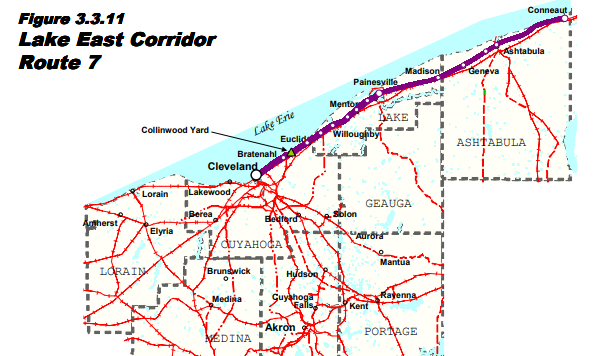
We urge NOACA, ODOT, and other partnerships/organizations to revisit the feasibility and implementation of Route 7, the Lake East Corridor, in the Northeast Ohio Commuter Rail Feasibility study. A passenger rail corridor that runs right through Lake County population centers would allow for easy, stress-free commutes to-and-from both Downtown Cleveland, and in between opposite ends of Lake County, while also boosting the local economy, and spurring developments around the route. On top of the economic benefits, the implementation of regional rail would allow for Laketran to focus on local routes, and better service Lake County and the regional rail stations.
Possible Stations and Locations:
Downtown Cleveland (Tower City)
University Circle (E. 119th-Mayfield Rd.)
Euclid (St. Clair Ave.-Babbitt Rd.)
Wickliffe (Euclid Ave.-E. 305th)
Willoughby (Erie St.-Depot St.)
Mentor (Plaza Blvd. OR Center St.)
Painesville (Richmond St. OR Railroad St.)
Perry (Depot St.)
Madison (N. Lake St.)
Geneva (N. Broadway St-Pleasant Ave.)
Ashtabula (Lake Ave.)
Cleveland-to-Painesville/Ashtabula Regional Rail (Long-Term Goal)