
Oklahoma City Just Announced a Transit Overhaul - Could Greater Cleveland Follow?
By: Andy Davis
OKC’s ONE Transit Project Aims to Transform City: How Can Greater Cleveland Learn?
A metropolitan area of >1.5 million people will see its transit network undergo a transformation, in which the transit authority is launching four new rapid transit projects, which are all-but guaranteed to be transformative for the area, as long as the transit authority follows through. Oklahoma City, Oklahoma is launching the ONE Transit project, where ONE Transit will become the new namesake for Oklahoma City’s regional transit authority.
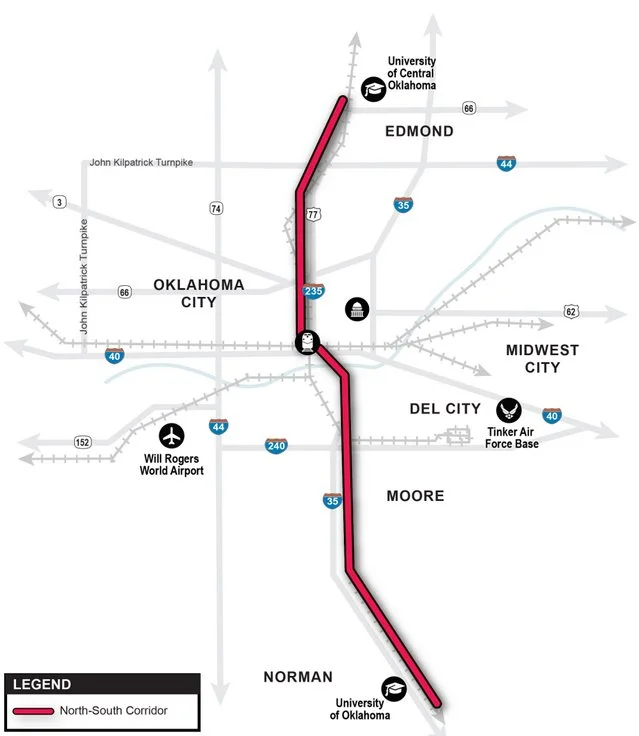
The project aims to build a 39-mile commuter rail line between the suburbs of Edmond and Norman, with Downtown OKC situated in the middle of the line. This will connect the University of Oklahoma to downtown OKC, while also connecting two of OKC’s most populous suburbs via rail.
While the commuter rail is the highlight of this ambitious project, there’s also two Bus Rapid Transit (BRT) routes being explored on the east and west sides of the city, which utilizes buses as a mode of rapid transit. With 10-15 minute headways during peak hours, and dedicated bus lanes, this allows for residents near the BRT to go car-free to the city, which cuts down on traffic and other forms of congestion.
And even more than THAT, Oklahoma City will implement something that Cleveland, Ohio actually pioneered in North America: Rail between downtown and the associated airport. Oklahoma City aims to build a 10-mile light rail route that connects Downtown Oklahoma City to their airport.
Oklahoma City proper has a population of >600,000, which almost doubles Cleveland’s >350,000 population. Despite this, Greater Cleveland has a metropolitan are population of >2 Million, while OKC’s metro sits around 1.5 Million. With these figures in mind, it’s easy to determine that Cleveland’s area experiences more sprawl, and has more of its population situated in the suburbs. Yet, OKC will see regional/commuter rail way before Greater Cleveland ever does. Why is that the case, and what can Cleveland do to carry the momentum created by a similarly-sized city?
The Current State of Cleveland’s Rapid Transit
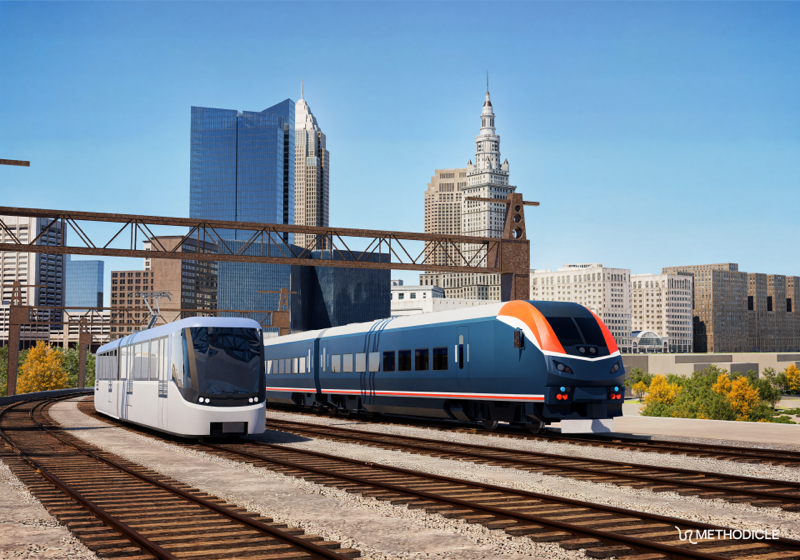
Currently, Cleveland’s RTA, which consists of three rapid transit light rail lines, one BRT line, and 1-2 more BRT routes on the way (MetroHealth, Broadway), is undergoing a fiscal crisis. Rising healthcare costs have drained emergency funds, leaving the RTA to resort to possible service cuts. However, the RTA will receive new railcars soon, replacing the 40+ year old ones that are currently in use.
This, on top of other capital projects, meant that the RTA is in it for the long haul. The RTA is seeking a tax levy sometime in the near future, hoping that expanded service and projects anchor the RTA down as a staple in the Cuyahoga County community.
If passed, the RTA would see its funding grow for the first time in over 50 years, which would be monumental for all of Northeast Ohio.
What this means is, despite being underfunded, Cleveland’s rapid transit has an extremely good foundation for being a “smaller“ U.S. city, due to the fact that the city of Cleveland was built on the railroads as a rust-belt powerhouse. Yet, the only public transit that suburban commuters can use to connect to downtown are 9-to-5 oriented park=n-ride buses (Lake, Portage, and Stark Counties), while some collar counties (Medina, Lorain, Geauga) don’t even have public transit authorities, let alone transit to and from Cleveland.
However, due to many freight right-of-ways spanning in and around the Greater Cleveland area, there is potential for the Greater Cleveland RTA to acquire the right-of-ways, or land around the right-of-ways, and rebuild Greater Cleveland into the passenger rail mecca that once was.
OKC’s New Commuter Rail Project In Cleveland Terms
The two termini of the proposed ONE commuter rail line, Edmond and Norman, are Oklahoma City’s two most populous suburbs. In Cleveland terms, this can be compared to connecting Parma and Lorain via commuter rail, although Parma is much closer to its respective metropolitan center than either of the three suburbs mentioned.
The ONE Transit Plan is utilizing a BNSF freight corridor to complete this project, meaning that little-to-no new tracks need to be laid. This is essential for cost saving, as more money can be allocated to trains and stations, allowing for better comfortability and ease-of-use.
Cleveland could easily replicate this in Lake County, as the CSX-owned Erie West Subdivision right-of-ways run straight through many city centers in the county. Population densities center themselves near potential stations as well. This can better be explained in a previous article; Regional Rail to Lake County?
To mimic the OKC plan, the rail could, and should, through-run through a city. This allows more more one-seat trips, and is a preventative measure for “traffic jams” in major city train stations.
In theory, A Lake County regional rail line could through-run out to Lorain, Sandusky, or even Toledo. With this, a one-seat trip could connect Lake County to Lakewood, Rocky River, Lorain, Cedar Point, Sandusky, and everything Toledo has to offer.
So, the remaining question to ask is why now? Why not before? The truth is that this idea of an area regional rail network has been proposed before. However, shifting population trends and a decline of population in the city center shifted a lot of growth trends and projects away from Cleveland.
So then, why now? Mainly, this is due to the fact that the Cleveland metropolitan area has seen a modest, yet stable, growth pattern as of recent. More cars are on the road. More trips around the area are being made, yet our transit has not caught up to that.
On top of that, RTA’s new light-rail vehicles mean that the RTA can use only one singular-height platform for its Tower City station, meaning that the RTA does not need to occupy the entire 1,000+ ft. island platform that was originally built for intercity passenger rail. Ken Prendergast of NEOTrans better explains this in his article, Tower City Center lacks coherent future without more development, rail access.
This means that Tower City could be open to occupy both intercity and regional transit tenats. The right-of-way is there to make this happen from its Cleveland Union Terminal days. Cleveland has a massive, underutilized train station right in its central business district, and is searching for ways to reactivate all of the unoccupied retail space inside of Tower City.
Now is the time to start urging NOACA and local governments to begin planning, so this can be implemented as soon as possible. Tower City connects perfectly to all that Cleveland has to offer, and its already the transit center of Downtown Cleveland. Why not now? Why not follow Oklahoma City’s ambitious, yet exciting plans?
